· 4 min read
Digitalisation is not a technical problem – it is a human challenge
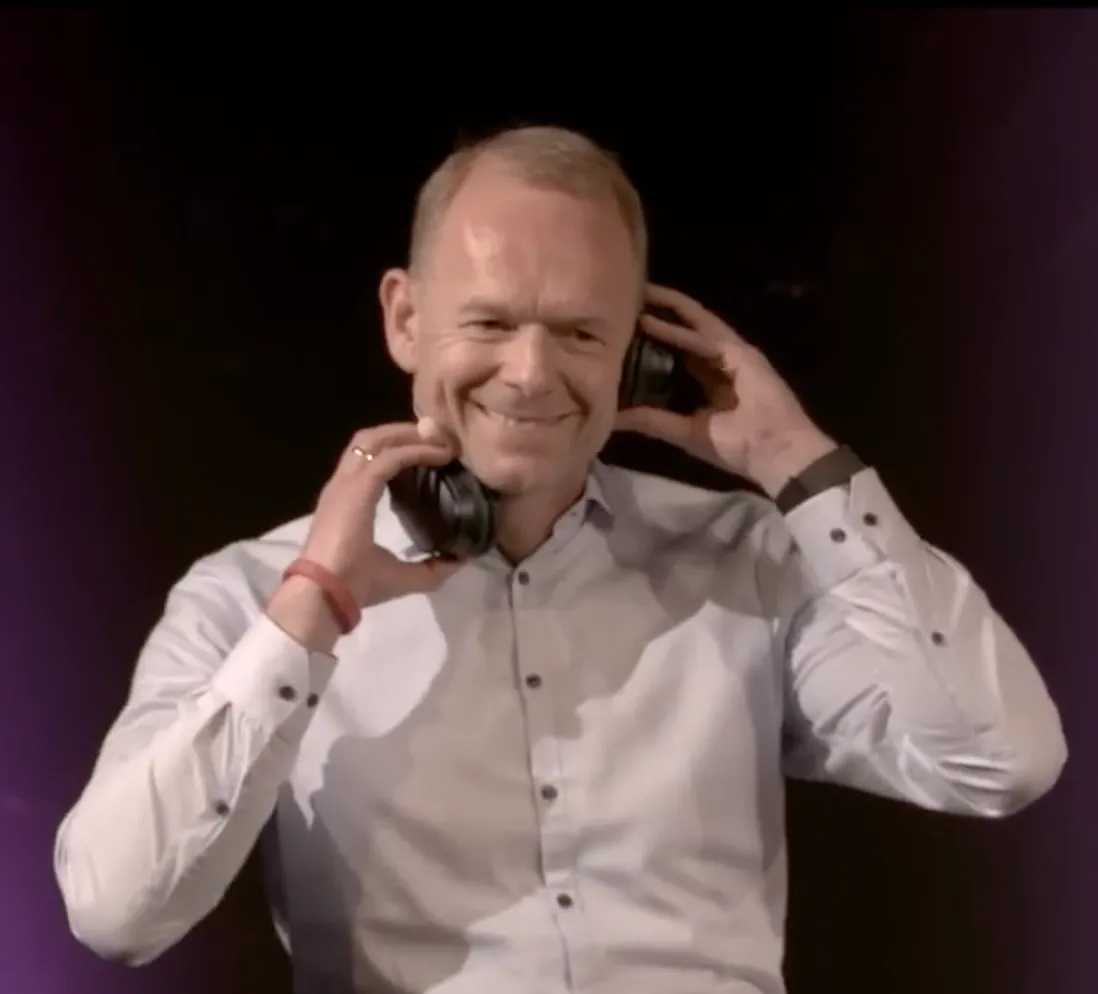
In the early 90s, I funded my studies by selling records. Then came the CD, then Napster, then Spotify. With each step, my load got lighter – but four things stayed the same: I needed Courage, to appear in public. Nerves, if I didn’t have the song I wanted with me. Composure, when something went wrong. And Credibility, to represent my own brand.
Courage, nerve, composure, credibility – CNCC (in German MNGG). I didn’t come up with the formula myself; the basic idea comes from Helmut Mauchers’ (external link, opens in a new tab) a slim volume that is well worth reading Management Handbook (external link, opens in a new tab) (also known as Audiobook on Spotify (external link, opens in a new tab)), which explains well why a good leader needs both: Manager and Leader. The technology around me has changed radically since my days as a DJ. These four qualities haven’t changed – they’ve just become more important.
Charleston, 2014
2,000 employees; at the time, it was Bosch’s most important plant in the US. My first glance fell on the organisation chart – highly hierarchical, with many levels. Nothing out of the ordinary. But what struck me was that the plant was deeply focused on faults. People talked about problems, hardly ever about what was going well – the key management metric was ‘accountable’ in the sense of ‘holding someone to account’. But here’s the thing: whatever you focus on, you get more of. If you focus solely on mistakes, you get more mistakes.
So we started by adopting best practices – highlighting the positives. That helped. But it wasn’t enough for the next step: we had to become a genuine High-performance culture develop.
A high-performing team works quickly and efficiently, building on a foundation of trust. It uses deliberately the Individual strengths – not because they’re told to, but because the team members recognise that others can do certain things better than they can. And the manager is part of the team, not just an external conductor.
The path to achieving this required precisely those CNCC (MNGG) qualities – now at management level:
- Courage, to step outside their comfort zone and trust their staff rather than micromanage them. We have provided every manager at the plant with training called Winning through Accountability (external link, opens in a new tab) sent, followed by a six-month programme spanning all levels of the organisation and all functions, focusing on roles, responsibilities and collaboration.
- Nerves, so that you can keep a cool head even when dealing with difficult HR issues and still seek a win-win solution.
- Composure, to take the time needed to make a good decision – even if it feels like it’s taking too long.
- Credibility, to be truly close to the team, to remain authentic, and not just to delegate the process, but to experience it first-hand.
One component was a Strengths Assessment (StrengthsFinder 2.0 by Gallup (external link, opens in a new tab)) with the entire management team: by the end, everyone knew their Five key strengths and those of others. A colleague whose strength was clearly not in giving presentations handed the ‘presenting’ over to someone who excelled at precisely that. It’s not a loss of control – it’s genuine appreciation when someone says, ‘You’re really good at that.’ That opens people’s hearts.
An anecdote from Germany
A few stages before that, in 2005 near Stuttgart: The factory was struggling; customers and bosses were dissatisfied. I walked through the factory in a bad mood and I tried to counteract it by applying pressure – some success in the short term, but unsustainable, and nobody was happy about it. Until one day my secretary stopped me: "Mr von Wartenberg, if you come into the office with a smile, we’re all happy and productive. If you come in looking sad, we’re not."
That sentence changed my view of leadership. As a manager, you make an impact even when you’re not doing anything.
Needed more than ever
When managers ask me whether they are still needed at all in a digitalised, agile world – my answer is: more than ever. People need guidance, especially as the pace and complexity increase. It is simply the style of leadership that needs to change: less control, more trust. Less of a hierarchical instinct under pressure, more CNCC (MNGG).
In my 20-minute talk 🎥 at the event, I’ll be sharing where I currently stand in terms of courage, nerves, composure, and credibility – and what this journey from a fault-focused workplace to a high-performance culture actually looked like – 🎥 at the INDUSTRY.forward (external link, opens in a new tab)2019 Summit in Berlin:
Clicking “Load video” establishes a connection to YouTube (in privacy-friendly mode). Data may be transmitted to the provider - see our privacy policy.
Do you have any thoughts or comments? I’d love to hear them. Please head over to the LinkendIn Post (external link, opens in a new tab). Or drop me a message via the contact page (external link, opens in a new tab).
I’d be delighted to discuss these topics with you.
Dr. Peter von Wartenberg (01.20)