· 4 min read
Psychological safety is the foundation. Accountability is the work.

The first building block: psychological safety
Psychological safety does not mean harmony, nor does it mean a ‘soft’ approach or low expectations. It means: in this team, I can admit to a mistake, ask an uncomfortable question or break bad news early on – without suffering any negative consequences as a result.
Amy Edmondson (external link, opens in a new tab), who coined the term, explains it better in eleven minutes than I could in three pages. If you’re only going to watch one thing on leadership this week, please make it this:
Clicking “Load video” establishes a connection to YouTube (in privacy-friendly mode). Data may be transmitted to the provider - see our privacy policy.
And then? Accountability.
This is where it gets interesting. Because psychological safety alone does not make a high-performing team. It makes for a pleasant team. What comes next – and immediately after that – is accountability. And this is precisely where I have a problem with my own mother tongue. Because the translation is “Accountability”.
When I first read the word, it put me off. Accountability sounds like an audit, like filing cabinets, like someone calling me to account. It sounds like something that happens to. Control rather than leadership. I worked this through with my coach (Dr Gerhard Kettgen). The result was two flipcharts which I have been using time and again ever since – because they get to the heart of the difference. Flipchart 1: The demands of modern leadership
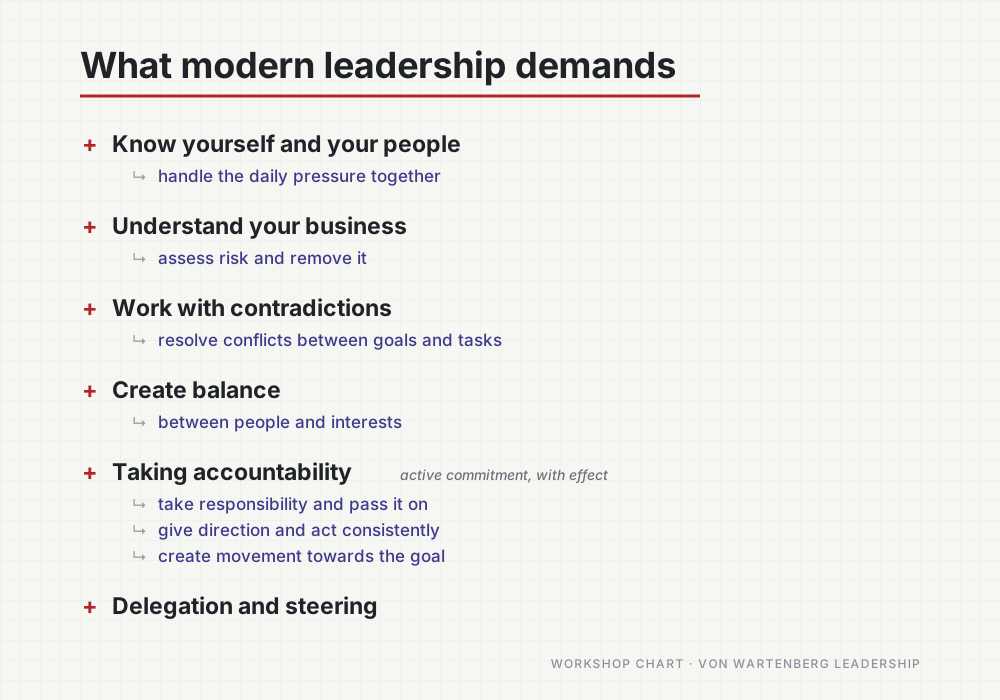
Five requirements that go hand in hand – and a sixth that underpins them all. What matters to me here is that accountability is not presented as a moral appeal, but rather as Crafts. Taking responsibility and convey. Provide guidance and Act consistently. Create momentum – towards a goal. ‘Active commitment with impact’ is written in the margin of the chart. That is the crux of the matter. Flipchart 2: The new dimension of responsibility
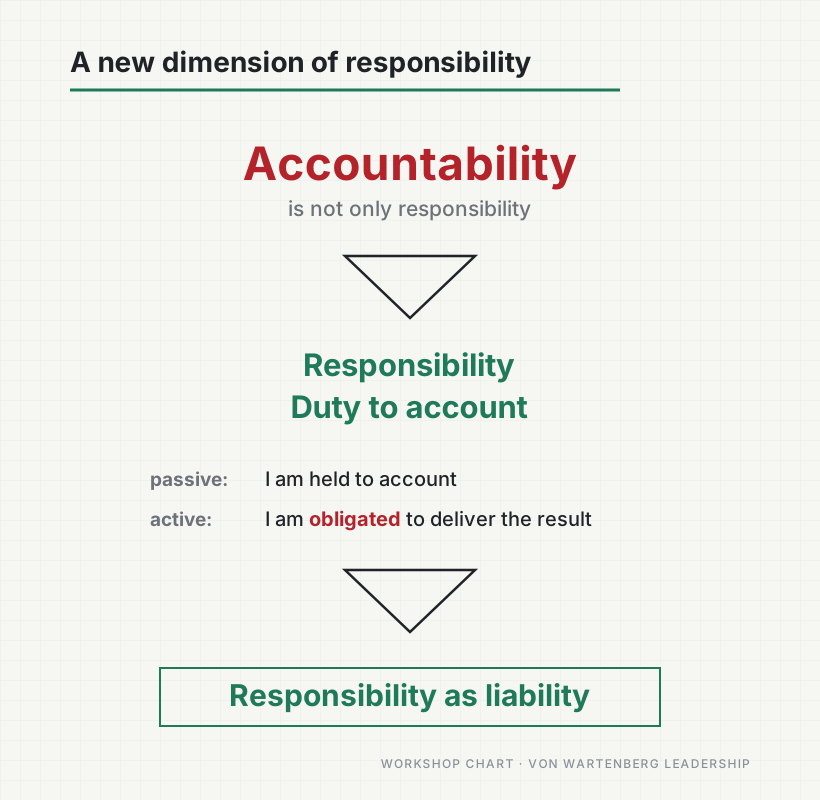
This chart changed everything for me. Accountability can, in fact, be interpreted in two ways:
- Passive: I am being held to account. It’s someone else’s turn. I’ll wait and see what happens.
- Active: I am liable (responsible) for the outcome. It’s my turn. Always.
The difference is not linguistic; it relates to attitude. And that is why my German interpretation of ‘accountability’ is not ‘Rechenschaftspflicht’, but rather: Responsibility as liability.
Accountability is a word that managers understand. Those who take responsibility do not simply pass the buck. Those who take responsibility do not look for excuses, but for solutions. Those who take responsibility remain involved even when the task has long since been handed over to someone else. And – this is the good news – responsibility is not something that is assigned to me. I take it on myself.
Why the order matters. Taken together, these two foundations paint a simple picture:
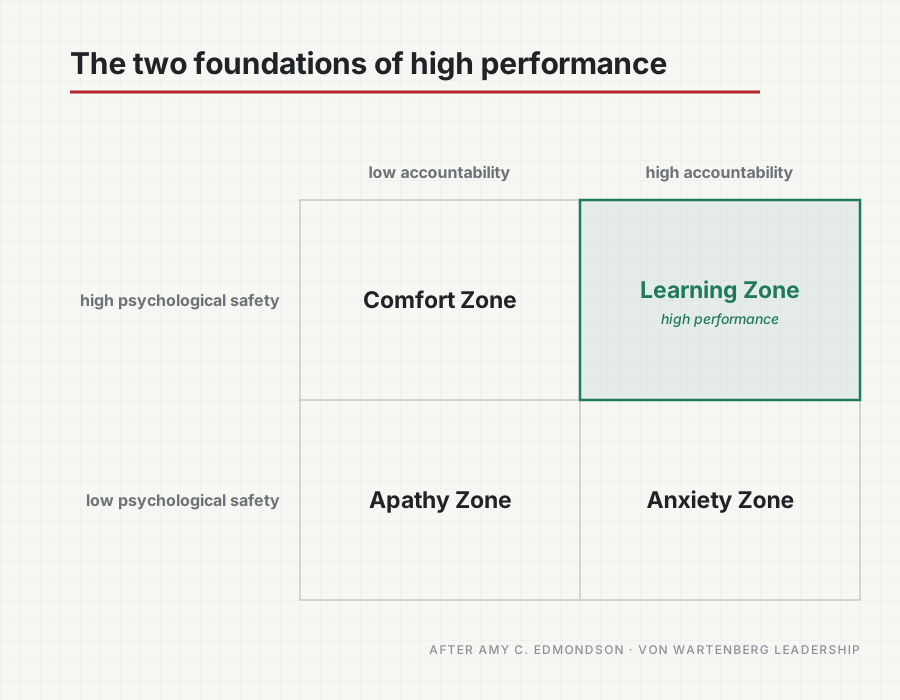
See also my explanation of the ‘High-Performance Team’ module on the page “Lead My Team (external link, opens in a new tab)". Security without accountability leads to the comfort zone – it’s pleasant, but nothing changes. Accountability without security leads to the fear zone – things do change, but nobody tells the truth any more. And whatever is kept hidden in the fear zone will resurface later. Usually at a higher cost.
Therefore: first, ensure safety. Then demand accountability – starting with yourself.
Three questions to take away with you
- 1Safety: When was the last time someone in my team gave me some bad news? early Brought? If you need a moment to think – that’s the answer.
So, how did I react to that? - 2Personal view: Where am I currently waiting to be called to account, rather than being held liable?
- 3Crafts: What result am I personally responsible for achieving over the next 90 days – one that is so clear I could write it down and show it to someone?
Leadership is not a state of being, but a daily choice. This is one of the most important ones.
Do you have any suggestions or comments? We’d love to hear them. Please go to the LinkedIn post (external link, opens in a new tab). Or drop me a message via the contact page (external link, opens in a new tab).
I’d be delighted to discuss these topics.
Learn to serve and protect
Dr Peter von Wartenberg (07.22)
The two facilitation charts are visual representations of flipcharts from a coaching process. You are welcome to reuse them provided you cite the source.
Book recommendation
For those who want to explore this in more depth: Henry J. Evans, ‘Winning with Accountability – The Secret Language of High-Performing Organisations’ (external link, opens in a new tab)". A concise, highly practical book. No flashy models, just clear language and agreements – who, what, by when, and how we’ll know it’s done.